
Unlock the Power of ChatGPT Service for Small Business in Lees Summit: A Comprehensive Guide
Boost your small business in Lee's Summit with practical tips on leveraging ChatGPT for customer engagement and efficiency.
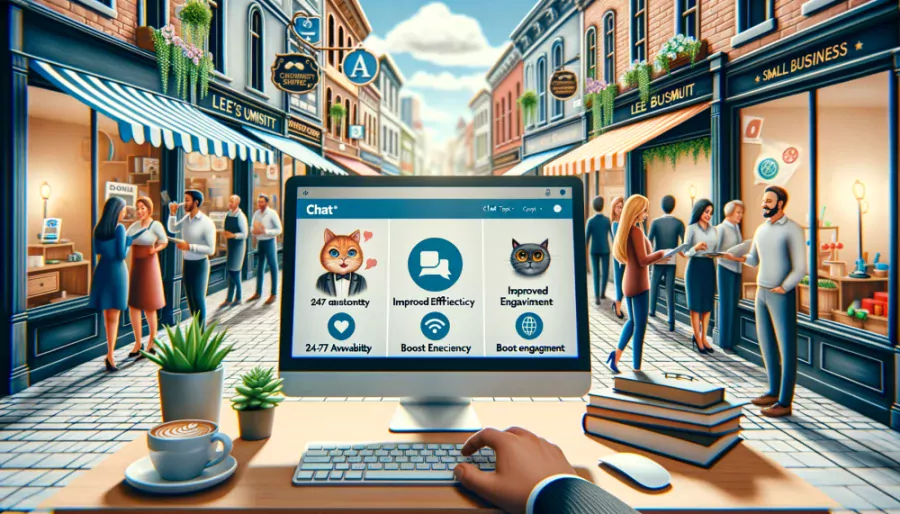
Small businesses in Lee's Summit are racing to improve customer support, marketing, and operations with conversational AI, and the results are real. Whether you run a boutique on Douglas Street or a home services company serving Jackson County and the Kansas City metro, a ChatGPT-powered assistant can handle FAQs, capture leads, and book appointments around the clock. Early adopters are finding that the right workflows reduce response times, lower support costs, and increase conversions. This guide explains practical ways to deploy a ChatGPT service for small business Lee's Summit so you can start fast and scale with confidence. You will learn proven use cases, a local-first implementation plan, and metrics that show ROI. Along the way, we will reference authoritative sources and share examples that mirror the realities of Lee's Summit entrepreneurs.
How the ChatGPT service for small business Lee's Summit drives growth
Customer expectations have changed, and prospects want helpful, instant answers at any hour. A ChatGPT service can greet website visitors, qualify leads, and route complex issues to your team via email or SMS while logging every interaction inside your CRM. For a local fitness studio, this might mean answering class questions, offering a free-trial link, and nudging visitors to book a spot online. A boutique retailer could use AI to recommend products, check store hours, and collect emails for a VIP list that fuels repeat purchases. According to independent research, generative AI has the potential to unlock productivity across sales, marketing, and service functions, a trend highlighted by industry analyses like McKinsey's generative AI report (see McKinsey).
Consider a hypothetical Lee's Summit home services business that added a ChatGPT assistant to website chat and Facebook Messenger. Within 60 days, the assistant handled common pricing questions, captured after-hours inquiries, and scheduled on-site estimates with calendar integration. Lead response time dropped from hours to seconds, and the owner reported a 22% increase in booked jobs from weekend traffic. The AI also generated personalized follow-up emails, keeping the pipeline warm without extra staff hours. Using platform documentation and best practices (see OpenAI docs), small teams can implement these capabilities safely and effectively.
Implementing a ChatGPT service for small business Lee's Summit: roadmap and best practices
Start by mapping your top five customer questions and the actions that follow each answer, such as booking, quoting, or escalating to a human. Next, choose the channels where conversations happen most: website, Google Business Profile chat, Facebook Messenger, or SMS. Connect your assistant to essential tools like your CRM, calendar, and help desk so it can pull relevant data and track outcomes. Draft friendly, on-brand responses that reflect your Lee's Summit voice and community values, and then test with real transcripts to refine. Finally, add clear handoff rules so complex or sensitive issues go to a person quickly, protecting trust and satisfaction.
Governance matters as much as configuration. Create usage guidelines that define what the AI can and cannot answer, and set up review checkpoints every two weeks to adjust prompts and workflows. To protect data privacy, avoid storing sensitive information and follow small-business security guidance from authoritative resources like the U.S. Small Business Administration (see SBA). Use analytics to track resolution rate, lead capture, and booking conversions, then A/B test different greetings and calls-to-action. Many businesses see early wins by launching a pilot on one channel, measuring results, and expanding once the playbook is proven. If you want hands-on help, connect with us.
Measuring ROI from a ChatGPT service for small business Lee's Summit
To quantify impact, establish a baseline before launch: average first-response time, weekly qualified leads, booked appointments, and customer satisfaction. After deploying the assistant, measure the same metrics and calculate cost per conversation versus human-only handling. Many small businesses target a 20-40% faster response time and a double-digit lift in leads as early indicators. Track revenue attribution by tagging AI-generated leads in your CRM and monitoring close rates through the sales funnel. Do not overlook qualitative feedback, such as fewer repetitive questions for staff and improved reviews mentioning responsiveness.
ROI accelerates when AI supports both acquisition and retention. For example, the assistant can propose add-on services, remind customers about seasonal tune-ups, or offer loyalty discounts after positive interactions. You can also use conversation insights to update your website FAQs and service pages, improving organic rankings for local searches. Regularly export chat transcripts to discover new content topics and product ideas for your blog; see examples and tips on our Blog. As your system matures, you can expand to voice, integrate payment links for deposits, and personalize scripts for neighborhoods across Lee's Summit and the greater Kansas City area.
For Lee's Summit entrepreneurs, the path to smarter growth runs through practical, well-governed AI. A focused ChatGPT assistant can reduce response times, capture more qualified leads, and free your team to handle high-value conversations. Start with a clear use case, measure results, and iterate based on real customer interactions. Use trusted resources and local expertise to deploy safely and effectively. If you are ready to turn conversations into conversions, we can help.
Frequently Asked Questions
What is the best first use case for a ChatGPT service for small business Lee's Summit?
Start with a web chat concierge that answers top FAQs, captures contact details, and books appointments on your calendar. This narrow scope delivers measurable impact while limiting complexity and risk. If weekends and evenings are your busiest times online, 24/7 coverage will convert more visitors into leads. Add social channels like Facebook Messenger after you prove the workflow on your site. Keep the copy on-brand, friendly, and specific to Lee's Summit customers to build trust quickly.
How do I ensure accuracy and protect my brand with conversational AI?
Define clear content boundaries and maintain a knowledge base with approved answers and policies. Use guardrails that escalate sensitive topics to a human, and review transcripts weekly during the first month. Train the assistant to admit when it does not know and to offer a next step, such as scheduling a call. Keep messaging consistent with your existing website, Google Business Profile, and printed materials. Finally, assign an owner who updates prompts and FAQs as your offerings evolve.
What does implementation typically cost and how fast can I launch?
Costs vary by scope, but most small businesses can pilot an assistant in 2-4 weeks with modest platform fees and configuration time. Start with a single channel, one or two key workflows, and basic CRM integration to control costs. As ROI appears, expand features like appointment reminders, multilingual support, and content generation. The phased approach spreads investment and keeps the project focused on measurable outcomes. Local partners can speed setup and training so your team adopts best practices from day one.

© 2026 Strategic Business Growth Systems